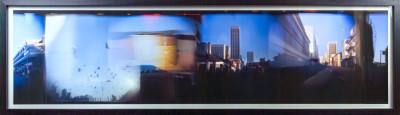
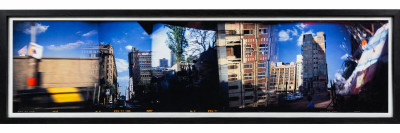
Jo Ractliffe (b. 1961) is a South African photographer whose work examines landscape, memory and the persistent after-effects of conflict, displacement and colonial history. Born in Cape Town and long-active as both a practising artist and teacher, she has developed a distinctive photographic approach that resists the conventions of documentary certainty, preferring instead to dwell in spaces of ambiguity, trace and partial visibility. Her images often ask what it means to look at places haunted by histories that are not fully legible on the surface.
Ractliffe worked extensively in South Africa through the 1980s and 1990s, photographing landscapes, urban environments and the residues of apartheid geography. From the early 2000s, she undertook a series of extended visits to Angola, producing bodies of work including Terreno Ocupado and As Terras do Fim do Mundo, which engage with the long aftermath of that country’s civil war. In Angola, she photographed conflict-damaged architecture, mined roads, improvised monuments and ordinary scenes of reconstruction, attentive to the ways in which violence leaves marks that outlast its immediate occasion. These Angolan pieces helped establish her as one of the most significant photographers working in the broader southern African region.
Ractliffe has exhibited widely internationally, including at major venues in Europe and North America, and her work has been the subject of substantial critical writing. She has been associated with the Market Photo Workshop in Johannesburg, where she has contributed to photographic education. She has also produced important photobooks that function as integral extensions of her practice.
Her photographs combine formal intelligence, historical sensitivity and an abiding ethical seriousness, making them essential to any account of contemporary South African art.