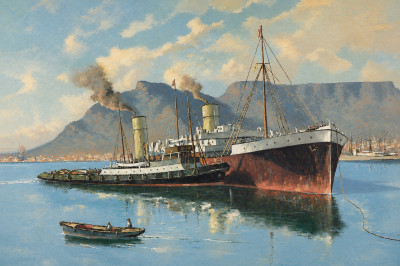
George William Pilkington (1879–1958) was a South African painter best known for marine subjects, harbour scenes and views of the Cape coast. Largely self-taught, though he received some early instruction, Pilkington initially worked as a civil servant while developing his painting practice in his spare time.
He turned to art full time in the 1920s, establishing himself as one of the most committed painters of maritime South Africa during a period when the port of Cape Town remained a hub of significant shipping activity. A keen yachtsman and fisherman, Pilkington brought an intimate, experiential knowledge of ships, sea conditions and harbour activity to his work, which distinguishes it from more purely topographical maritime painting. His canvases often combine careful observation of vessels, rigging and waterfront architecture with a dramatic sense of weather, movement and maritime atmosphere.
He was skilled at rendering the particular quality of Cape light on water, the tonnage and character of working vessels and the activity of ports at different times of day and season. These qualities gave his harbour paintings a vitality that secured their popularity with buyers and collectors during his lifetime.
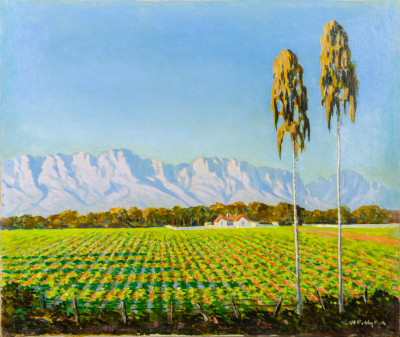
Beyond his marine subjects, Pilkington also painted the winelands, city scenes and interiors, demonstrating a wider range of interests than is sometimes acknowledged. He produced murals and public works and was involved in the cultural life of Cape Town over several decades. However, it is as a painter of shipping, ports and coastal exchange that he remains most frequently remembered in South African art history.
His work provides a significant visual record of a maritime environment that has changed beyond recognition since his most productive years.